

Blog
Identifying & Breaking Toxic Workplace Habits.

Introduction
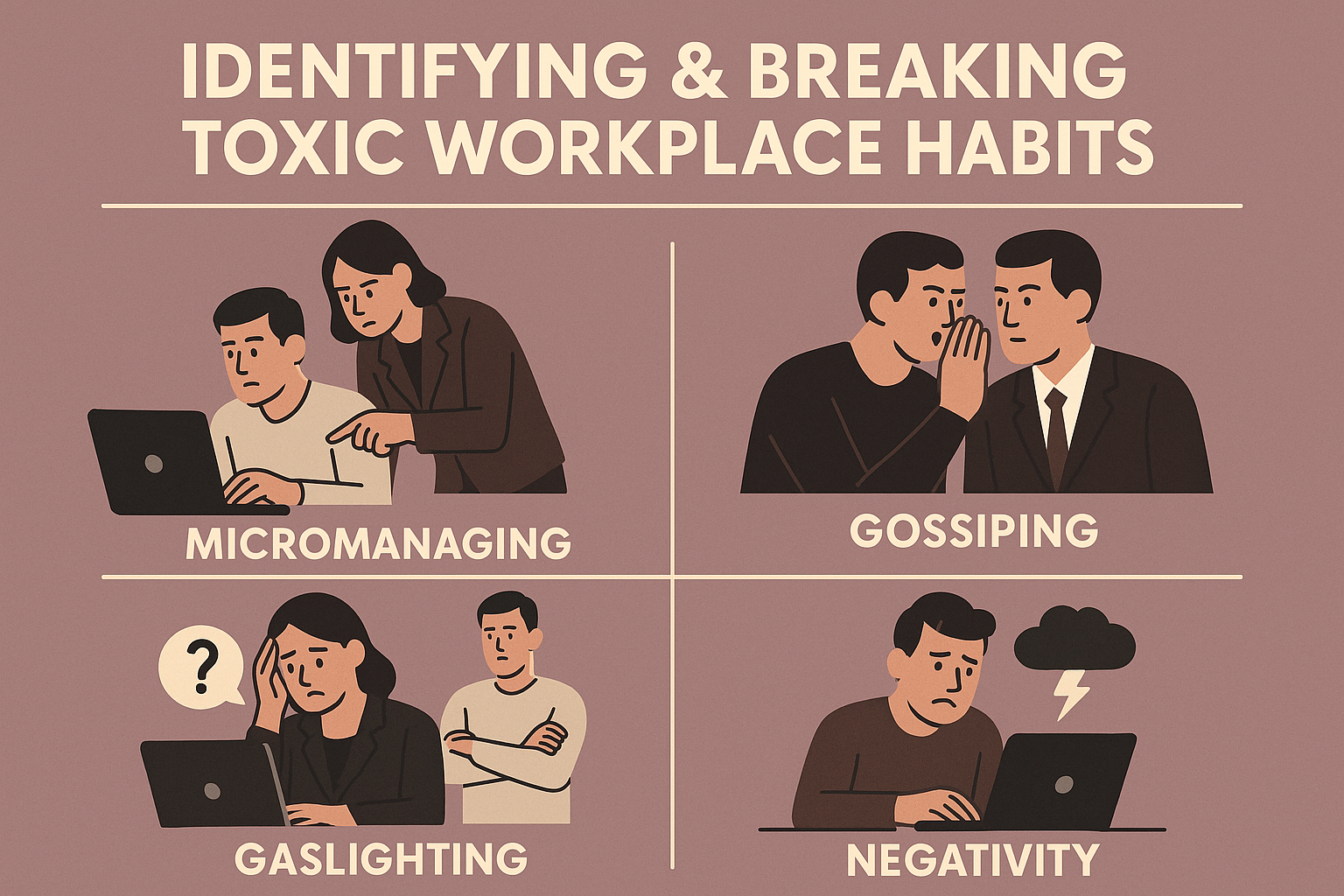
In today’s fast-paced corporate world, the term “toxic workplace” has become all too familiar. A toxic workplace can significantly impact employee well-being, team dynamics, and overall organizational health. Identifying and breaking toxic workplace habits is crucial for fostering a positive workplace culture. This blog post will explore how everyday workplace behaviors can unknowingly contribute to a toxic environment and highlight the importance of healthy communication, accountability, and positive leadership practices.
Understanding Toxic Workplace Habits
Recognizing the Signs
Toxic workplace habits often manifest in subtle ways, making them difficult to identify. These can include poor communication, lack of accountability, and negative leadership practices. Recognizing these signs early is essential for preventing them from becoming ingrained in the workplace culture.
The Impact on Employee Well-being
Toxic habits can lead to increased stress, burnout, and decreased job satisfaction among employees. This not only affects individual well-being but also hampers team dynamics and productivity. Addressing these issues is vital for maintaining a healthy work environment.
Breaking the Cycle
Promoting Healthy Communication
Effective communication is the cornerstone of a positive workplace culture. Encouraging open dialogue and active listening can help prevent misunderstandings and foster a more inclusive environment. Leaders should model these behaviors to set the tone for the entire organization.
Accountability and Leadership
Holding individuals accountable for their actions is crucial for breaking toxic habits. Leaders must lead by example, demonstrating integrity and transparency in their decision-making processes. This builds trust and encourages employees to take responsibility for their actions.
Fostering a Supportive Environment
Encouraging Professional Growth
Providing opportunities for professional growth and development can help mitigate the effects of a toxic workplace. By investing in employee training and career advancement, organizations can create a more motivated and engaged workforce.
Building a Positive Workplace Culture
Creating a supportive and inclusive workplace culture requires a collective effort. Encouraging collaboration, recognizing achievements, and promoting work-life balance are essential components of a healthy organizational environment.
Conclusion
Identifying and breaking toxic workplace habits is a continuous process that requires commitment from all levels of an organization. By fostering healthy communication, accountability, and positive leadership practices, companies can create a more supportive, productive, and inclusive workplace culture. Addressing these issues not only enhances employee well-being but also contributes to the overall success of the organization. Embrace the change and take the first step towards a healthier workplace today.